“Love and compassion are necessities, not luxuries. Without them, humanity cannot
survive.”
— Dalai Lama (Trzeciak and Mazzarelli
xi)
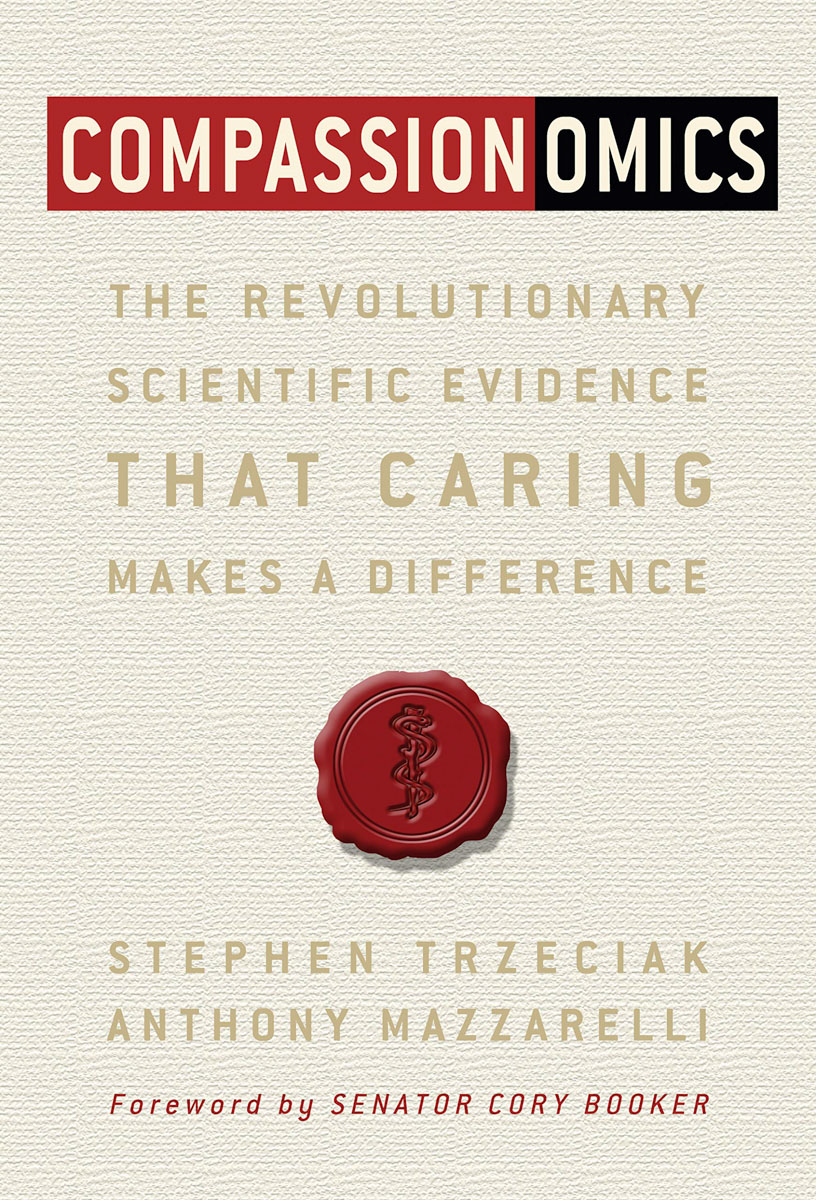
Compassionomics presents an enormous amount of scientific data reeling in the
literal reality and significance of this Dalai Lama quote. The decline in how compassion
is presented from clinicians to patients has led to dozens of studies confirming a
concerning reality: patients suffer when they are not treated compassionately,
regardless of if clinical and hospital administrative protocols are followed.
A Harvard Medical School study survey revealed stark statistics: nearly half of Americans
and physicians believe that the health care system is not compassionate (6). The same
percentage of Americans also believed health care providers are not compassionate
(Trzeciak and Mazzarelli 6). However, when physicians were asked if providers were,
three-fourths said they were (6).
There was a greater consensus between patients and their providers in another survey that
showed that 63% of healthcare providers “Have observed a decline in compassionate care
over the past five years” (6).
This decline has proven quite costly for patients— in the increase of medical errors,
costs incurred for patient care, and in the reduced efficacy of treatment plans.
When comparing the 891 diabetic patient outcomes of high and low compassion physicians
(29 total), the results were striking: patients of highly compassionate physicians were
80% more likely to have optimal blood sugar control (82). U.S. researchers then repeated
this study in Italy, where it could be replicated on an enormous scale (242 physicians
and nearly 21k patients), and revealed another astounding fact: patients of high
compassion physicians had a 41% lower chance of having serious diabetes complications
(82-83).
In a 1960s study by Harvard Medical School researchers, similarly strong results of the
power of compassionate care were shown. Patients that had a pre-surgery appointment with
the anesthesiologist to build rapport and ease anxieties had “More than double the
effect of administering pentobarbital,” a powerful anesthetic (62). Their second
experiment showed that those who had this pre-surgery meeting needed 50% less opiate
pain medication post-surgery (62).
If these results were published in acclaimed medical journals such as The New England
Journal of Medicine and JAMA at the time, why did they not
revolutionize medical school education, residency programs, and the fabric for how
patient-provider relationships were navigated for decades to come? Why has the level of
perceived compassion by providers greatly declined since the 60s, especially in the wide
scale adoption of electronic health records?
The authors of Compassionomics argue that it is because, prior to the release of
this 2019 book, the findings of hundreds of scientific articles on this topic were not
connected to one another, building on each other like how medicine was in its various
specialties. Although over six years has passed since the book’s release, medical care
in this country still hasn’t been revolutionized– but by educating ourselves and
spreading the word, we pave the way towards a standard level of care that reflects
scientific findings, and what patients truly deserve.
A study that looked at how 136 Level 1 trauma patients responded to their subjective
assessments of their own recovery six weeks and one year following hospital discharge
produced an incredible finding: “The odds of a patient-reported good outcome were four
times higher when the physician was rated as having high compassion” (Trzeciak and
Mazzarelli 63). Furthermore, a Mass General Hospital study showed that “Patients
randomly assigned to receive compassionate palliative care actually survived, on
average, 30 percent longer” (68).
A University of Haifa in Israel study even found compelling evidence for the power of
hand-holding done by a loved one: volunteers’ pain rating from a painful heat stimulus
declined by 50% (70-71).
In a Carnegie Mellon University study, even the number of hugs received by volunteers
facing common cold symptoms contributed to 32% of the protective effect that social
support had against infection (87).
Moreover, when an oncologist showed compassion in consultations with breast cancer
survivors that they had cancer again, they reported significantly less anxiety than
those in the control group that had just been presented the facts (108-109).
Over and over, the data shows that when physicians are compassionate towards patients,
patients trust them more, view them as more competent (the research shows this is
scientifically backed), are more compliant with treatment plans, feel less alone, and
have more hope.
But, in a system where patients get to see providers for 10-15 minutes, and for most of
that they’re staring at a screen, thinking about how other patients are waiting to see
them, where does building a more compassionate clinical team start?
It starts with addressing the hidden curriculum of medical schools so it can instill in
the next generation of physicians a better way of healing.
The hidden curriculum describes the habits and unsaid way of doing things medical
students pick up on practicing physicians– absorbing what it means to be a competent
physician. In order to do that, compassion training should be mandatory for all
clinicians. It seems unnecessary and obvious that in helping professions, compassion
should and is shown by most everyone. But, it’s not. When you’re engaging in patient
care 40 hrs a week for years on end, you inevitably become desensitized to medical
aspects of your environment. But, more than that, you lose touch with how devastating
your daily tasks are to the average person. For instance, being in the emergency room,
getting diagnosed with a grave illness, or being told a loved one is near the end are
things patients will remember and be affected by for years, if not the rest of their
life. The way physicians talk to patients about the nature of their health issues
greatly affects their understanding of their medical reality and what that means for
other aspects of their lives.
But, in the compassion crisis, we’re facing another alarming crisis– one of unprecedented
physician burnout. 50% of U.S. physicians are suffering from burnout (288). A Mayo
Clinic survey of nearly seven thousand physicians found that 35% of doctors are so burnt
out that they show high levels of depersonalization, a trait that makes providing
compassionate care difficult (8). The same percentage was found in a study that looked
at over a thousand European family physicians– it’s not a U.S.-only problem.
One thing to note though is that burn out starts early. A University of Pennsylvania
study found that during the first year of residency, student doctors experienced a sharp
increase in depression with one-third of students having experienced it (8-9).
Practicing medicine is a mentally and emotionally taxing profession which is why the rate
of severe mental health crises is nearly double than that of the general population, and
the highest rate among all professions (289-290). In addition to this, almost 40% of
U.S. physicians have symptoms of depression, compelling 6% of them to experience
life-threatening mental health emergencies (290).
It is vitally important for healthcare systems to encourage healthy work cultures, ones
in which clinicians are able to foster strong relationships with colleagues, proving as
protective factors for good mental health.
Even here, compassion is the answer. “Research shows that compassion for others can be a
coping strategy to overcome personal distress and strengthen one’s own resilience”
(300-301). Here lies the difference between empathy and compassion. When we feel
empathy, the parts of our brain that light up when we are in pain ourselves light up,
but when we feel compassion (act on our empathy), our reward pathway lights up.
In fact, “Neuroscience research shows that the most potent activator of brain circuits
involved in human happiness is actually… compassion” (304). Humans have been hard-wired
to be compassionate towards others for millenia as an ancient survival strategy.
And as research continues to show modern-day, it is still a survival strategy. Not only
do physicians show decreased symptoms of burnout when they lean-in emotionally with
their patients, but they report better well-being, promoted by how the “helper’s high”
increased feelings of calmness, feelings of self-worth, and boosts “Circulating
neuromodulators (such as the hormone oxytocin) which not only buffers stress, but also
triggers positive emotions (such as feelings of calm and closeness)” (302-303).
An interesting study done on Chief Medical Officers (CMOs) in Harvard Business
Review confirms these findings. While 69% of them reported “severe,” “very
severe,” or “worst possible” stress levels, they had surprisingly low levels of burn out
(313). 91% of these CMOs actively practiced compassion in their careers– protecting them
physically, mentally, and emotionally from the negative effects that stress and burnout
can have (313). That was their secret to being resilient in their intense, demanding
careers.
But the benefits of more compassionate care extends to the finances of healthcare
organizations: “Hospitals that are rated highly on their patient experience scores are
also higher performing hospitals financially” (219). For instance, those that were rated
“excellent” by patients had 2.9% higher average margins than low performers (219). A
4.7% margin vs a 1.8% one is the difference between being able to keep doors open or not
for many hospitals, highlighting the nonnegotiable need to provide positive patient
experiences (220). This is especially relevant as the federal government partially
determines how they fund healthcare organizations based on how they score on a mandated
patient experience survey (HCAHPS) (218-219).
But, what do patients value in their healthcare experiences?
One Harris Poll showed that patients valued being listened carefully and being easy to
talk to way more than the prestige of where the physician was trained, their experience
treating patients with their medical conditions, and even if they spoke their native
language (222-223). This shows how compassion transcends culture, language, and belief
systems.
Kenneth Schwartz, a health lawyer that received an advanced lung cancer diagnosis at 40
with no smoking history, and a wife and two-year-old son, shared the profound impact his
clinicians had on him, remarking “compassion makes ‘the unbearable bearable’” (120-121).
One particular physician scientist, Dr. Kurt Isselbacher took a great interest in
helping him navigate which experimental therapy to choose. “Schwartz wrote this about
him: ‘I was especially affected because such hopefulness was not coming from a faith
healer, but a distinguished researcher’” (121). Later on, he remarked how
touched he was even by the small empathetic gestures his caregivers gave him, saying:
“In some ways, these quiet acts of humanity have given more healing than the high-dose
radiation and chemotherapy that hold the hope of a cure” (122).
Although Schwartz passed away less than a year after his diagnosis, his legacy continues
through the “Schwartz Rounds” that occur in lecture halls and conference rooms of
hospitals nationwide. During these regularly scheduled rounds, healthcare providers
openly discuss the socio-emotional issues they face in caring for patients and their
families, finding community and support in sharing with co-workers that understand what
they’re going through (122). Over 550 hospitals and health systems across the globe
participate in Schwartz rounds because of the support made possible by the Schwartz
Center for Compassionate Healthcare. The Center supports over 200k healthcare
professionals yearly through education, resources, and regularly held conferences (123).
Unlocking the door to a more compassionate health care experience for patients doesn’t
require a lot of time either. A University of Wisconsin-Madison study showed that a
two-week compassion training course showed fMRI changes signalling greater ability to be
compassionate (237). Furthermore, a Mass General psychiatrist and her colleagues
developed three 60-minute modules rooted in the neuroscientific underpinnings of how to
harness human connection in clinical settings (275). In a randomized controlled trial,
“The physicians who were randomized to empathy training had a statistically significant
rise in positive patient ratings of physician compassion” (276).
Compassion training works, helping to decrease medical errors, improve the mental health
of clinicians and patients alike, and improves the bottom line. More than that, it
promotes the very humanity and care our world desperately needs.
There is a worldwide loneliness epidemic, so much so that, in 2018, the U.K. government
appointed a Minister of Loneliness (51). Heart attack patients that lacked emotional
support had three times higher odds of death than those who did (50). Moreover, the
Harvard Study of Adult Development that began in 1938 and is still ongoing gathered this
revealing insight: “The people who were the most satisfied in their relationships at age
50 were the healthiest at age 80” (51-52).
When people are at as vulnerable and emotionally-taxing a point in their lives as being
admitted to the hospital due to fatal health issues, they need that point of human
connection to feel less alone, that someone cares. Patients pay attention to
how they or their loved ones are treated and talked about– that “53-year-old alcoholic
with liver failure” is someone’s brother, husband, father, and uncle, and it can be a
depressing sign to patients as to just how depersonalized and disconnected many
physicians are to the people they closely interact with.
“Researchers found that 56 percent of physicians believe they do not have time to
treat patients with compassion.”
— Compassionomics, 249
Research done by Northwestern University concluded 31.5 seconds was all it took for a
physician to demonstrably show compassion in their interactions with patients as well as
their responses (254). Physicians' fears of how being compassionate might take up too
much time for them to stay on track with schedules or open up a Pandora’s box of
patients delving into their emotional issues was proven to be unfounded.
A Johns Hopkins University study found that “Compassionate care not only reduced
patients’ emotional distress, but the effects also persisted up to six months
after the clinic visit” (256).
Compassion training includes “Training in communication skills, recognition of emotional
cues, increasing eye contact, sitting down (versus standing up), goal setting, shared
decision-making, and avoiding interrupting the patient,” components that benefit
patients, providers, healthcare systems, and even the government and insurance companies
who have lower bills to pay from physicians that truly listen and order less diagnostic
testing (277).
Additionally, a perceived lack of caring rather than negligence is what pushes most
families to litigate (244). When patients trust their physicians, they believe them to
be more competent and well-intentioned, traits that mean the difference between deciding
to file a medical malpractice suit– even if the physician made costly errors (242-246).
The science is in on clinician-led compassion in healthcare settings, and I prescribe
three doses of compassion training modules (60 mins each) to all clinicians worldwide.
From nursing aides at nursing homes to esteemed specialists in academic hospitals, we
could all benefit from learning about the science of human compassion. To be
compassionate is to be human and treat one another with the humanity we desperately need
to feel whole in a world that is increasingly connected and showing unprecedented mental
health issues such as loneliness at the same time.
“Before one can learn to be more compassionate, there is a vital first step. First,
one must believe that every patient deserves compassion. Every single one.”
— Compassionomics, 285
References
- Trzeciak, Stephen, and Anthony Mazzarelli. Compassionomics: The Revolutionary
Scientific Evidence That Caring Makes a Difference. Huron Consulting
Services LLC, 2019.