In the summer of 2012, a massive experiment was taking place in London and Tel Aviv to observe how magic—yes, magic—could improve hemiplegia in children (Fancourt 116). Hemiplegia is a symptom that involves having one-sided paralysis (“Hemiplegia”).
In these magic camps, magicians and occupational therapists teamed up to turn hand therapy exercises into magic tricks for children with this form of paralysis (Fancourt 115).
A comprehensive assessment of the attendees was taken before and after the Magic Camp, and the results were remarkable (Fancourt 116–117):
“Within just two weeks, there was a 30 percent improvement in how much the children used their affected hand. The children were faster too. In a timed test of how long it took to complete a series of tasks such as stacking objects and turning pages, the children took over nine minutes before the magic camp. Two weeks later, they took just seven minutes. In fact, by the end of the magic camp, instead of just relying on their unaffected hand, the children were performing 93 percent of daily tasks with both hands. Three months later, the improvements the children had experienced from just that two-week camp were maintained.”
— Daisy Fancourt, Art Cure (116–117)
For young children that may find hours of physiotherapy (stretches and exercises) boring, involving the arts, or, specifically, magic, could not only spell out more engagement, interest, and motivation for patients with this condition but also greater results.
How could the arts improve health outcomes to such a degree when the core element being hand training exercises led by medical experts such as occupational therapists did not change?
Because the arts are the forgotten fifth pillar of health—one that the World Health Organization now recognizes as a health behavior, just like diet and exercise, as part of its global health program (Fancourt 242). Additionally, 25 countries have published clinical guidelines that recommend the use of arts or arts therapies to benefit various health conditions (Fancourt 238).
From the NICU, to pre-operative settings, to unconscious patients, to terminal disease, engaging in the arts can support our health.
For instance, in a study of 52 premature infants in the neonatal intensive care unit (NICU), the music group that got to hear 30 minutes of recorded lullabies three times a day for the duration of their stay displayed less signs of agitation throughout the day, consumed more calories per feed, and spent 3.5 fewer days in an incubator and left the hospital five days sooner (Fancourt 138).
Furthermore, future studies confirmed the benefits of music in the NICU: babies exposed to music have lower, calmer heart and breathing rates, better oxygen saturation, reduced levels of distress, and decreased crying (Fancourt 138). In fact, even the number of apnea episodes (a temporary stop in breathing) decreased when mothers sang to their babies in the NICU (Fancourt 138–139).
Moreover, a US randomized study of 94 premature infants found that babies that listened to recordings of their mothers singing lullabies every evening, by day five, were drinking more than double the milk volume and were managing two more feeds/day than the control group that spent this time in silence (Fancourt 139). This led to the babies in the music group leaving the hospital nine days earlier—an incredible outcome (Fancourt 139).
But, arts engagement is not only beneficial to premature infants, but could be to all hospital patients.
Dozens of studies have shown that when relaxing music is played in hospital settings, beneficial effects like these are shown to patients (Fancourt 145):
- Improvements in heart rate, and blood pressure
- Better oxygen saturation for all ages undergoing procedures such as biopsies, getting catheters, receiving burn treatments, getting dialysis, and undergoing mechanical ventilation
In addition to this, when a patient’s favorite music is played as they get weaned off ventilators to breathe on their own, they experienced these positive effects (Fancourt 145):
- Reduced sympathetic nervous system activity
- Stayed calmer
- Less shortness of breath
- Managed an extra 78 minutes off the ventilator/day
Furthermore, if patients heard music daily, they were less anxious, needed less sedatives, and spent 1.4 fewer days on mechanical ventilation.
Another area in which inviting music into a clinical setting could benefit patients would be in the pre-operative setting. Around 48% of adults worldwide suffer from preoperative anxiety (Fancourt 151).
Suffering from preoperative anxiety can lead to several poorer patient outcomes:
- Increased need for anesthetics
- Increased drug side effects
- Greater delirium and panic upon waking up from surgery
- Slower wound healing
- Longer recovery times
For children, preoperative anxiety has also been linked to a greater exhibition of behavior problems two weeks afterward such as experiencing nightmares, separation anxiety, eating problems, and bed-wetting (Fancourt 151).
20% of the problems were shown to continue six months later (Fancourt 151).
In another study, when patients got to play the music of their choice during surgery, they needed around half the dose of benzos, a sedative, than the control group even though both groups had similar levels of pre-operative anxiety (156; “Benzo”).
Additionally, listening to music leads to significantly lower postoperative pain on the day of the surgery (Fancourt 154). These positive effects were greater for patients that did not receive general anesthetic (Fancourt 154). This is partially due to the fact that music leads to the release of opioids as a part of our pleasure response (Fancourt 155).
In a study conducted in France with adults hospitalized with chronic mechanical, inflammatory, fibromyalgia, or neurological pain, the music group (listened to 20 minutes of music twice a day) showed 54% lower pain scores on day five compared to the control group that only showed a 26% decline (Fancourt 156).
There are even benefits for patients with consciousness disorders as listening to music and music therapist sessions have been shown to (Fancourt 160):
- Increase alertness
- Enhance brain activity
- Help patients establish eye contact
- Encourage patient noises
Moreover, nursing and medical students that provided arts classes for patients (ex. visual art, theater, drama, filmmaking, writing sessions for stories and graphic novels) improved patient communication skills, were able to better reflect deeply on their interactions with them, develop their interpersonal skills, increase their caring behaviors, and display more empathy (Fancourt 182). Due to these benefits, 27 nations integrate the arts into their undergraduate medical programs (Fancourt 182).
However, the benefits of engaging in the arts do not stop in clinical settings—they are especially beneficial to one’s health if they engage in them on a regular basis across the lifespan. In fact, epidemiologists in Sweden found a 34% lower risk of coronary heart disease for culturally engaged adults while those in China found a 35% lower risk of developing type 2 diabetes even when accounting for confounders (Fancourt 211).
For those faced with terminal illness, engaging in the arts shows many benefits as well (Fancourt 215):
- Decreased anxiety and depression
- Increased hope
- Improving acceptance
- Better reported quality of life
- Reduced treatment side effects
- Improved tolerance of symptoms such as pain, nausea, fatigue, agitation, and breathlessness
For loved ones of those that pass away in a hospital, the arts can help them too.
For instance, at Chelsea and Westminster Hospital in London, as a patient passed away, a guitarist played a patient’s favorite songs (Fancourt 216). The family sang along for nearly an hour afterward—using music as a bridge for connection and as a positive outlet for dealing with the grief they were faced with (Fancourt 216). At the same hospital, arts therapists worked with loved ones to make scrapbooks about who they had lost to process their bereavement, and babies not expected to leave the NICU were photographed so their parents would have these images to cling on to as they processed the weight of what their family went through (Fancourt 216).
Overall, arts engagement has been shown to produce numerous, significant health outcomes for people across the lifespan but also for several specific patient populations. Including the arts more in the healthcare system could be one way to increase patient outcomes and satisfaction that could have ripple waves towards a healthier society.
Works Cited
- “Benzodiazepines: What They Are, Uses, Side Effects & Risks.” Cleveland Clinic, Cleveland Clinic, 30 June 2025, my.clevelandclinic.org/health/treatments/24570-benzodiazepines-benzos.
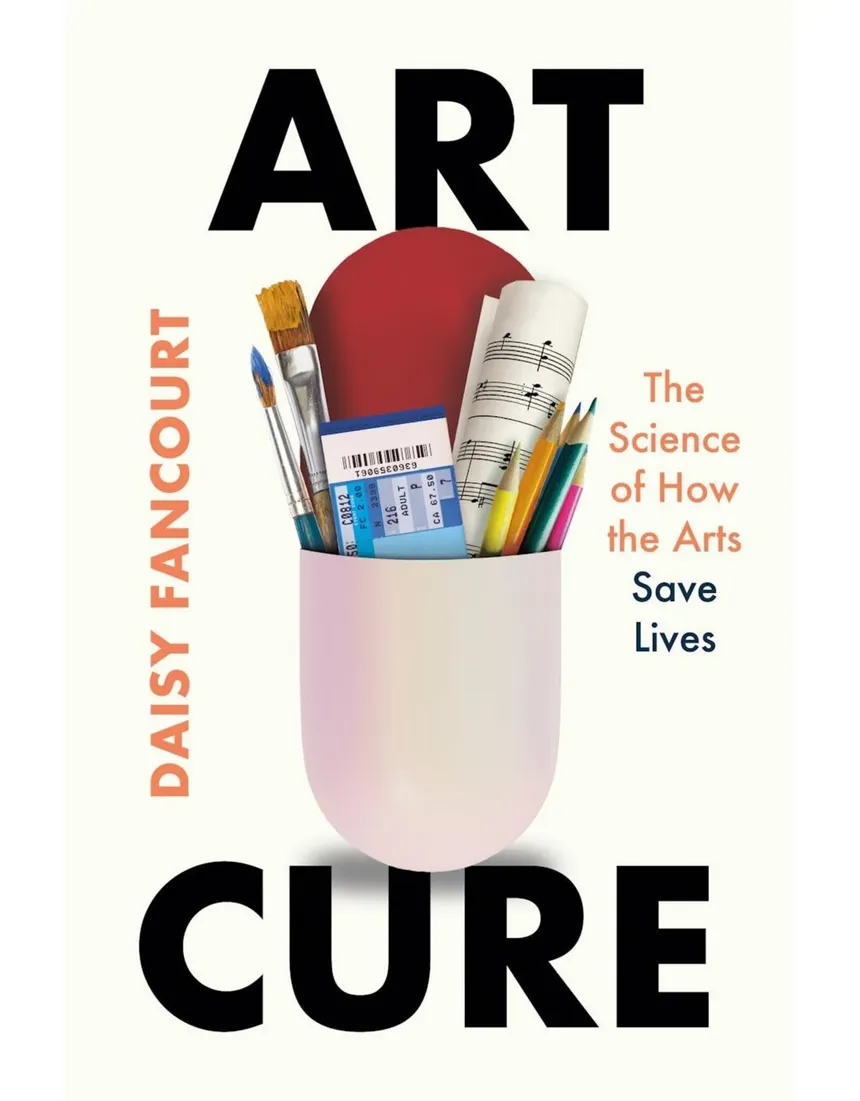
- Fancourt, Daisy. Art Cure: The Science of How the Arts Save Lives. Celadon Books, 2026.
- “Hemiplegia: Definition, Causes, Symptoms & Treatment.” Cleveland Clinic, Cleveland Clinic, 1 Oct. 2025, my.clevelandclinic.org/health/symptoms/23542-hemiplegia.