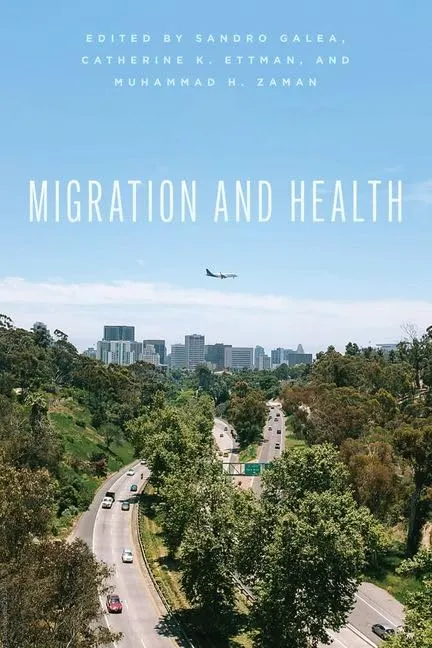
“It is estimated that there are 272 million international migrants today, about 3.5 percent of the world’s population… If international migrants made up one country today, they would be the fifth largest country in the world after China, India, the United States, and Indonesia.”
— Migration and Health, pg. 4
People migrate for reasons as varied as seeking greater economic opportunities, escaping authoritarian regimes and war, obtaining higher education, running from religious persecution.
The 1946 Constitution of the World Health Organization (WHO) states “The right to the enjoyment of the highest attainable standard of physical and mental health is a fundamental part of our human rights" (54). However, this principle lies in direct contrast to the realities millions of migrants face. In many countries, asylum seekers are primarily entitled to emergency care, as primary care access is limited (55). Furthermore, 12/30 European countries provided limited health care entitlements to asylum-seeking children with Germany standing out as having the most restrictive policy for migrant children in the continent (55).
The UN High Commissioner for Refugees (UNHCR) provides the strongest legal and institutional frameworks for the international law of refugees; however, they have no enforcing power which means the human rights migrants have are primarily up to the current government and existing policies of a nation.
This has led to a wide array of policies and processes concerning the treatment and care of migrants. Migrants face heightened health care needs because of the dangerous routes they often take to secure better futures, and because of the often subpar access to high-quality health care in their homelands.
As climate change contributes to record-high average temperatures and natural disasters, the World Bank estimates that more than 117 million people will need to migrate within their countries by 2050 in addition to the 20 million a year that are displaced annually due to extreme rapid-onset climate events (70-71). The poorest citizens of the poorest countries will face the most severe impacts as they are more likely to depend on climate-dependent industries such as agriculture and fishing.
Migrants are more likely to get Hepatitis B and C, HIV, STIs, tuberculosis, malaria, and COVID-19 (92-95). Because of a lack of screening policies and effort taken to ensure adequate migrant health, there is a great deal of needless suffering that migrants face for diseases that are curable and have widely available treatment options (93).
Moreover, migrant communities face heightened risks for undernutrition and being overweight or obese (118). Undernutrition contributes to much of the 45% nutrition-related risks for global child mortality (118).
Interestingly, older migrants, especially those that have a disability, are more likely to migrate than those that are younger than 65 and able-bodied (147). This highlights the need for nations to invest more in migrant health, as many have greater health needs while being physically weaker. In addition to this, disabled people, as migrants, have limited rights to employment and welfare in their host nations, and “Tend to be ignored in migration policy and interventions” revealing a troubling reality (266).
Another marginalized group within migrant communities is that of children. One-eighth of international migrants are children (36 million) and they account for half of all refugees as well as 42% of those that are forcibly displaced (149). Additionally, even after being settled in their host nations, children still face increased risk of violence and exploitation (151). Moreover, the circumstances as to why and how they were able to be resettled can affect their psychomotor development, immune function, and long-term physical and mental health (151). Furthermore, in overcrowded European accommodation facilities, Hepatitis A outbreaks are highly prevalent for those under 18 (153). Over time, children are better able to recover from the high rates of depression and PTSD common in migrants, but there are still barriers in them accessing mental health support (157).
However, technology can be harnessed to advance migrant health– and is being harnessed through UN Sustainable Development Goal SDG-9C which aims to provide universal, affordable Internet in the least developed nations (LDNs) by 2020 (179-180). This goal was created knowing that only 19% of an LDN's population used the internet compared to 87% in high-income countries (180). This is being done through the development of digital translation and communication tools that are able to positively impact the limitations migrants face in receiving health care such as cost, trust, time, and availability (180-181). Two other digital tools that are addressing migrant health inequities are Tarjimly, an app that connects migrants to volunteer translators, and the Health Resources Available Mapping System (WHO-sponsored) that assesses medical resource availability for emergency care in 21 countries such as Syria, Sudan, Yemen, and Bangladesh (181). Furthermore, the United Nations developed an electronic health record system to serve Palestinian refugees seeking primary care (181). It includes features such as an appointment system, medicine analysis tools, and auto-populated prescription forms based on clinical guidelines (181).
Clean water accessibility is also essential to avoiding infectious disease outbreaks in migrant populations (181). For this, the UNHCR has developed a tool to monitor water truck deliveries using a networked ultrasonic water-level sensor series (181).
Here are more examples of migrant-tailored healthcare technologies being deployed:
- Step-by-Step, a WHO-developed mental health resource that trains users in behavioral activation, psychoeducation, stress management, positive self-talk, and relapse intervention (182).
- Multi-Adaptive Psychological Screening Software (MAPSS) and Open Data Toolkit (ODK) that aid in self-reporting, collecting, and assessing mental health symptoms (182).
- The HADStress screening tool used alongside telepsychiatry that allows for PTSD screening based on these symptoms: headaches, appetite changes, sleep changes, and dizziness (182).
To switch gears, in September 2019, Bangladesh shut off internet and telephone access in Cox’s Bazaar (city), affecting the Rohingya and host community refugee camps on the grounds of preserving security and addressing rising crime (183-184). In Bangladesh, a national registration number or a passport is required to obtain a phone number, presenting ethics concerns as the COVID-19 pandemic began (ban ended Aug 2020 after facing international pressure) (184).
Another ethical concern for migrants related to data privacy: “Often, the willful and consensual submission of biometric or personal data by refugees is later used for surveillance, detention, and deportation” (184). Two examples of this would be in the U.S. Deferred Action for Childhood Arrivals (DACA) program, and in the deportation of migrants from France in 2006 (184).
Nationalism and discrimination against migrants plays a central role in the beliefs of many that migrants are not obligated to the rights of citizens, including that of access to medical care. In fact, many states have responded to increasing migration by reducing migrant health benefits– a decision causing many to face severe, preventable health issues that may affect them long-term. Access to quality health care is essential as Norman Daniels, Harvard professor and bioethicist argues that “health is of special moral importance because it contributes to the range of opportunities open to us” (197-198).
Furthermore, it goes without saying that the traumatizing and challenging situations migrants face affect their health more than access to medical care can in many cases. One infamous example lies in when the U.S. separated young migrant children from their parents and put them in cages.
Immigration status is now recognized as a negative determinant of health because of the vulnerabilities in immigration law, fear of deportation, and legal barriers in accessing health care they face (198). Especially considering that immigrants account for a considerable percentage of the healthcare workforce of wealthy nations such as the United States (39% of physicians and 17% of nurses), and the United Kingdom (28% of physicians), it is vitally important to expand health care to our foreign-born populations (199).
To conclude, it is essential that migrants have free access to primary health care with a focus on addressing the needs of more vulnerable populations such as pregnant women and children (295). While international efforts such as the 1951 Convention Relating to the Status of Refugees and the 1967 Protocol are important steps in progressing migrant human rights on a global scale, bettering local legal structures are equally as important, according to Migration and Health (42; 378-379).
Access to quality healthcare is a human right, as good health is essential to the human realization of potential and success.
Migrants deserve better.
Works Cited
- Galea, S., Ettman, C. K., & Zaman, M. H. (Eds.). (2022). Migration and Health. University of Chicago Press.
- Harvard T. H. Chan School of Public Health. (n.d.). Norman Daniels. Harvard T. H. Chan School of Public Health. https://hsph.harvard.edu/profile/norman-daniels/